Customer story · My Burger
Minnesota’s My Burger Saves $90,000 a Year on French Fries Alone With opsi by GoTab
My Burger brought fry portions back to spec with opsi, saving roughly $90,000 a year and giving managers weekly food cost data across 11 Twin Cities locations.
 +
annual fry savings when My Burger first adopted opsi
current annual savings estimated by Patrick Cattoor
restaurants using weekly food cost data
Operator Snapshot
Business: My Burger
Footprint: 11 locations and a food truck across the Minneapolis–St. Paul metro area, with a 12th location slated to open in April 2027
Hospitality model: Quick-service counter concept in 1,800- to 2,100-square-foot restaurants, with about 65% of sales off-premise (online pickup, walk-in takeout and roughly 10% third-party delivery) and 35% dine-in
Technology selected: opsi by GoTab for inventory, actual-versus-theoretical (AvT) food cost tracking, recipe costing, vendor price tracking and manager dashboards
What the Team Needed
- Food cost data comparing what each store used with what it should have used, starting with french fries.
- Weekly reports managers could act on, not month-end results up to 45 days old.
- A weekly count of high-cost items staff could finish in under two minutes.
- Price tracking that flags broadliner increases and out-of-contract charges.
- Recipe costing tied to live pricing and product mix to show the true cost of an ingredient switch.
The Challenge
Patrick Cattoor used to stand in My Burger’s dining rooms and watch the same scene repeat itself. A cashier would bus a table, tip a pile of uneaten french fries into the trash and move on to the next one.
“That’s not value being given to the guest. That’s just waste, and we’re paying for it,” said Cattoor, vice president of operations for the Twin Cities burger chain. “We could have done what everyone else did, which is raise prices, call it a day and say our food cost is back in line. Or we could work on it and give real data to our store managers every week.”
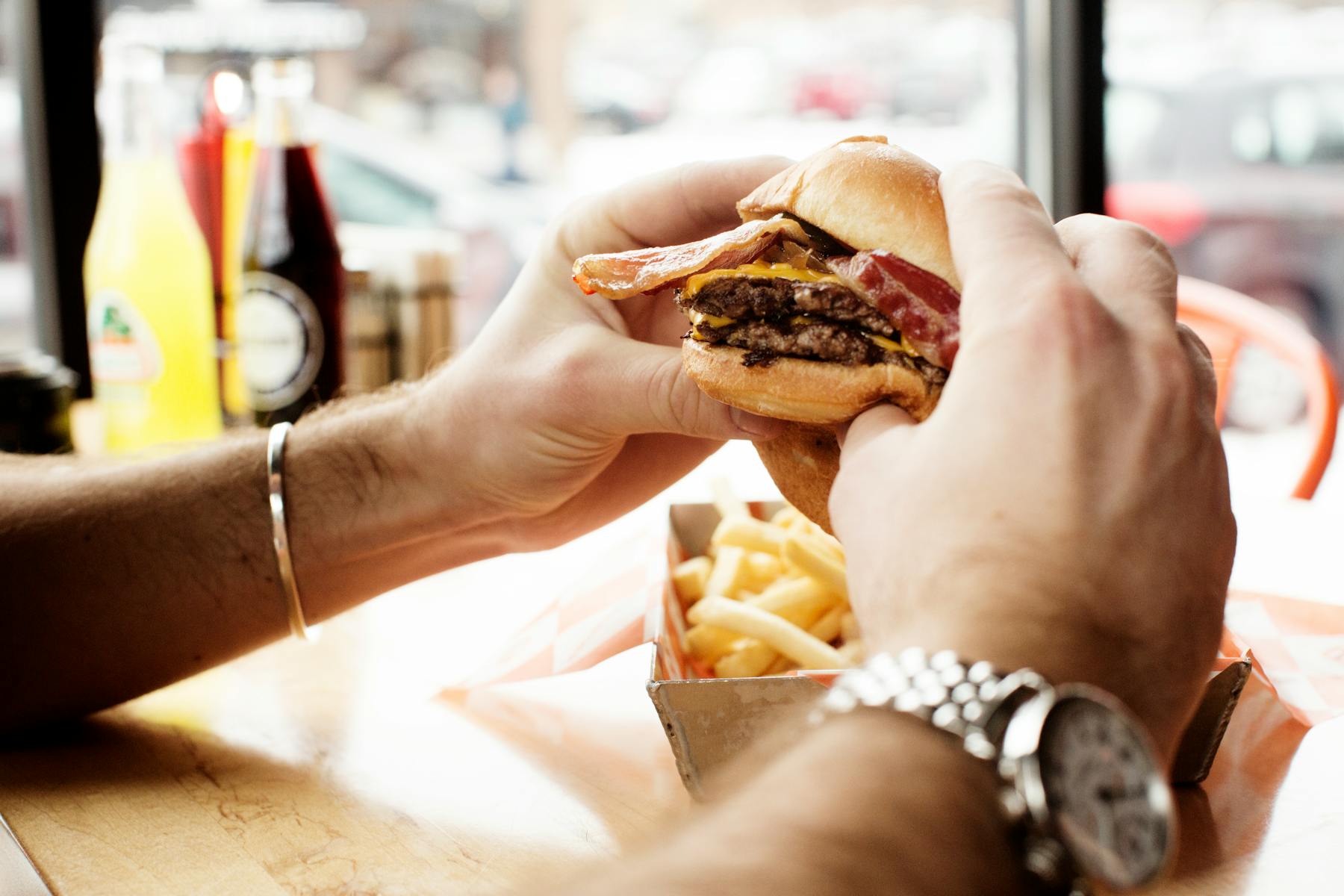
My Burger took the second path. With opsi by GoTab tracking actual-versus-theoretical food cost, the company brought its fry portions back to spec and cut more than 1% from its food costs. When the chain first started using opsi, that 1% was worth roughly $90,000 a year. As ingredient prices have climbed, Cattoor estimates the same savings now run closer to $140,000 annually.
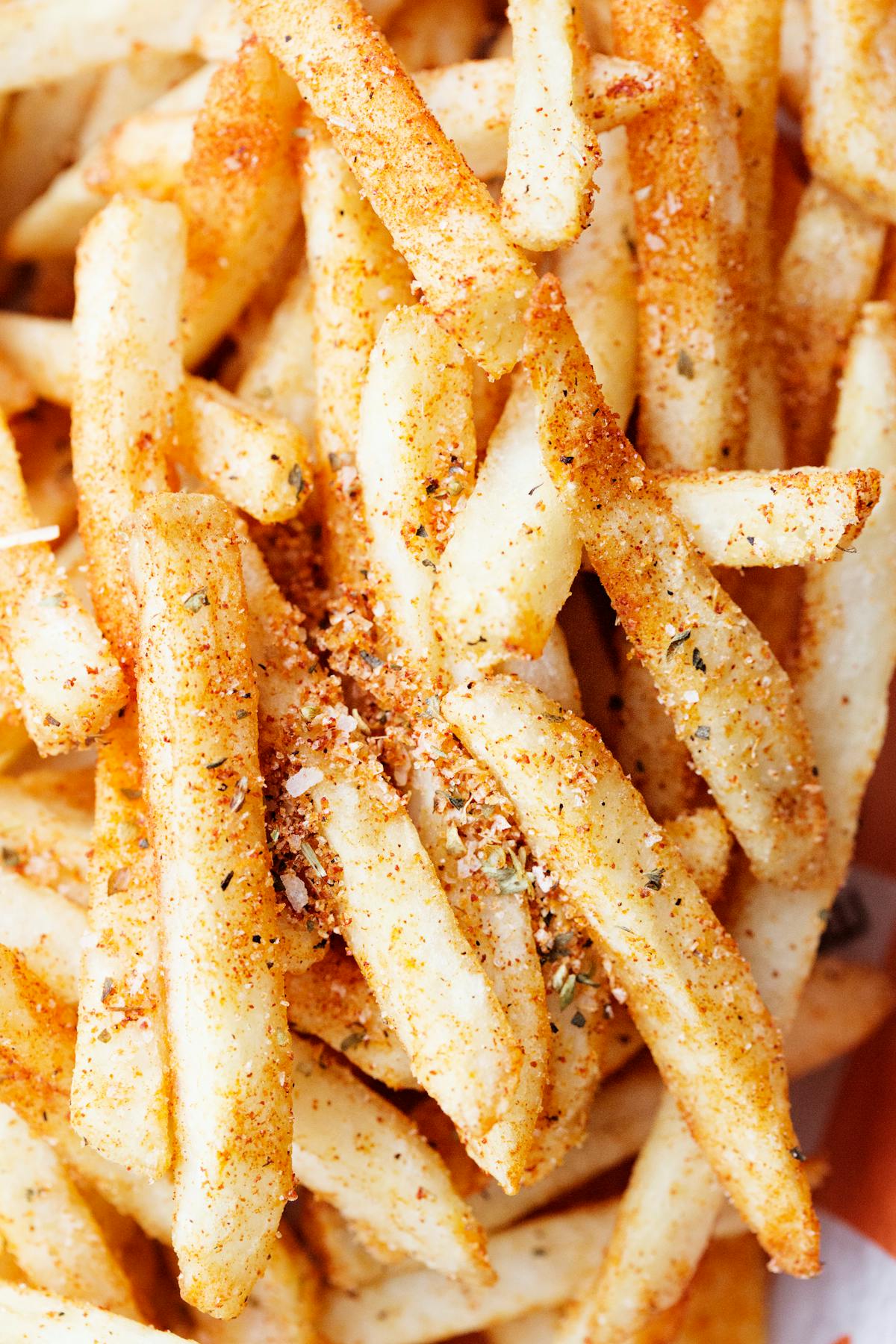
The recipe called for a specific portion of fries, but before opsi, crews routinely served more than they should.
“Every five orders, you’re basically giving away a free order of french fries,” Cattoor explained. “French fries are not cheap, and when we’re serving thousands of orders a day, that adds up very quickly.”
Cattoor never planned on a restaurant career. He came from a major accounting firm and was between jobs in 2011 when John Abdo, the president of My Burger, invited him to help open the company’s second location. The Abdo family had launched the first My Burger in Minneapolis in 2004.
“I figured I’d do it for a year or two, and that was about 15 years ago,” Cattoor shared with a smile. “Somewhere along the way, I became more of a restaurant person than an accountant.”
The brand calls itself a “Minne-chain,” a family-owned, Minnesota-only operation built on never-frozen beef, Pacific Northwest potatoes and buns from a carefully chosen bakery. Its polished look sometimes leads guests to assume it’s a national concept.
“People tell us all the time that they love this concept out of California, and we get to tell them it started right here in Minneapolis,” Cattoor said. “We take that as a real compliment. It means the brand feels bigger than we are, when the truth is we’re a local, family-owned business that has built this one restaurant at a time.”
Value sits at the center of the brand. A burger and fries at My Burger runs just $10.49, the kind of quality Cattoor said guests in the Twin Cities would pay closer to $20 for at a full-service restaurant.
Why My Burger Chose opsi
Cattoor handles most of the technology rollouts at My Burger, and he knew where the leak was. Most of the company’s prime costs were already under control. Buns, for example, rarely go missing because nobody accidentally puts two on a burger. Fries were different.
He had already tried to solve the problem with another inventory platform. Its actual-versus-theoretical (AvT) feature, the reason he bought it, never fully worked.
“Their senior engineers told me AvT doesn’t work 100%, and I said, ‘This is the core feature you sold me the product on,’” Cattoor said. “They told me most people don’t use it and that chefs love the platform for costing out menus. I don’t have a use for that. We don’t change our menu that much.”
His introduction to opsi came through Abdo, who met opsi founder James Passafaro after Passafaro presented to a local restaurant ownership group.
“The one thing I told James was, ‘This has to be real. You have to show me the real french fry cost,’” Cattoor said. “He said they could do that, and I told him, ‘No, I mean for real.’ And they delivered. James and Matt Luckey put in the work to get there, they’ve done a great job with it, and it’s been a good partnership ever since.”
How opsi Puts Data in Managers’ Hands
Cattoor built the weekly process around speed. Each store runs a “hot count” of six or seven SKUs – including beef, buns, fries, bacon and ice cream – which together make up about 85% of the company’s purchases. The goal is for staff to finish the weekly count in less than two minutes.
Over the past six months, My Burger also moved its full monthly inventory into opsi. Before that, stores sent spreadsheets to the chef, who reviewed them and passed them to accounting. Errors crept in, and the files were hard to update.
The bigger issue was timing. My Burger’s managers earn bonuses tied to cost of goods sold, but under the old process, they didn’t see results until accounting closed the month around the 15th.
“Some of that data was 45 days old by the time managers saw it for the first time,” Cattoor said. “They’d tell me they didn’t know what happened 45 days ago, and we couldn’t tell whether anything had been fixed without waiting another 30 days to find out. With opsi, they can take real action in real time.”
Now a manager can walk into the weekly meeting knowing the store ran $328 over on fries the previous week, then celebrate the next week when the number drops to $27. Across 11 stores, those swings add up fast. Cattoor said the approach reflects how he wants to lead.
“If I can set my managers up to understand what’s happening, they’re going to make the right decision 99% of the time,” he said. “If we build a system where we have to manage them into doing it right, we’re just playing the role of the police, and we don’t want that. We’d rather be the cheerleader. Go achieve great results, show them to us and we’ll cheer you on.”
Opsi’s price tracking adds a second line of defense. Before opsi, Cattoor paid a legacy vendor mainly for a weekly report on price movers. Now he can spot a $50 case that suddenly jumps $10, a 20% increase, and take it straight to his sales rep. More than once, the rep has dug in and found the price fell outside the contract.
“If I hadn’t asked that question, we would have paid all those invoices, overage included,” Cattoor said. “That’s how broadliners work, and they can make their margins really well doing things like that. Keeping them honest is a healthy check, and it drives a lot of value for us.”
The recipe module gives My Burger’s chef the same visibility on the menu side. With live broadliner pricing and product mix data in opsi, he can see exactly what an 8-cent increase on bacon means across every bacon cheeseburger the company sells before committing to a switch.
Growing in a Flat Market
All of that work shows up on the menu board. My Burger raised prices for the first time in 24 months this October, after holding steady since 2024.
“We were averse to raising prices over and over the way everyone did during COVID, because we wanted to offer great value,” Cattoor said. “As everything we purchased got more expensive, we didn’t want to pass that on to the customer and make it their problem. So we got creative, found savings on the food cost side and kept our margins where they needed to be.”
The strategy is working. My Burger’s same-store sales are still growing year over year while much of the industry treads water.
“I go to conferences and hear people say flat is the new up, and you should be happy if you’re flat,” Cattoor said. “When they ask how we’re doing, I tell them we’re up a couple of points. It’s not as strong as I want it to be, but when everyone else is down and we’re up, I’m okay with that.”
My Burger opened its 11th restaurant in July 2025 and plans to open its 12th in April 2027. The team is scouting one or two more sites for 2027, with a long-term goal of about 20 locations in the Twin Cities. Cattoor said the biggest constraint isn’t real estate. It’s finding leaders, and he sees opsi as part of the answer.
“Platforms like opsi let us bring people in faster and get them up to speed,” he said. “We can attract higher-quality talent, people who are excited about the industry, because they walk in and see they have all the tools to do their job well. Managers can’t control rent, utilities or credit card fees. What they can control is labor and food cost, and that’s where they help us win.”
See What opsi by GoTab Can Find in Your Kitchen
Most operators already know their food cost is too high. Few know exactly where the money is going. Opsi by GoTab is a back-of-house restaurant intelligence platform that connects the front of the house to the kitchen and accounting in one system. It tracks recipe and food costs in real time, automates inventory and invoice processing, flags vendor price changes and gives kitchen teams smarter task management, so managers can fix problems in days instead of months.
Connect with the GoTab team today and see how opsi can protect your margins without raising your prices. Click here to learn more.
Put the lesson to work
Give your team one less thing to work around.
Bring the process that slows the day down. We will show you how opsi connects it to the rest of the operation.
Get a demo